
Your hotels, restaurants, and resorts face unique e-invoicing demands. We deliver end-to-end UAE e-invoicing for hospitality industry compliance, from PMS integration to FTA reporting.
Book Your Assessment

Hospitality e-Invoice UAE specialists with deep understanding of hotel billing workflows and multi-department revenue structures.

Vendor-neutral ASP selection guidance that matches your property management system to the right provider.

FTA regulatory advisory grounded in Ministerial Decision No. 243 of 2025 and Peppol PINT-AE standards.

PMS-native integration planning for Oracle Opera Cloud, SAP, Microsoft Dynamics, and leading hospitality platforms.

Ongoing compliance support covering staff training, invoice validation, and real-time CTC reporting to the FTA.





We assess your property's current invoicing workflows, PMS configurations, and data structures against FTA requirements. This audit identifies gaps in VAT treatment, Tourism Dirham handling, and structured format readiness before any implementation begins.

Our team configures your property management system and ERP to produce FTA-compliant invoices in Peppol International Invoice, UAE Profile (PINT-AE) format. This covers room billing, F&B charges, event invoicing, and consolidated corporate folios.

We evaluate Accredited Service Providers against your transaction volume, HIS compatibility, insurance workflows, and multi-branch needs. E Invoicing for Healthcare Companies in UAE requires an ASP equipped for clinical billing complexity.

Every invoice field must match the UAE data dictionary standards. We map your existing billing data, including tax identification numbers, transaction classifications, and VAT calculation fields, to the mandatory structured XML schema.

Front desk teams, accounts receivable staff, and F&B cashiers each interact with the invoicing process differently. We design role-specific training programs and updated standard operating procedures tailored to every department's workflow.

E-invoicing for hospitality UAE compliance does not end at go-live. We provide post-implementation monitoring, FTA submission tracking, error resolution, and periodic compliance reviews aligned to evolving regulatory updates and mandate expansions.
Prepared for phased rollout: voluntary adoption from July 2026, mandatory compliance for large businesses by January 2027.
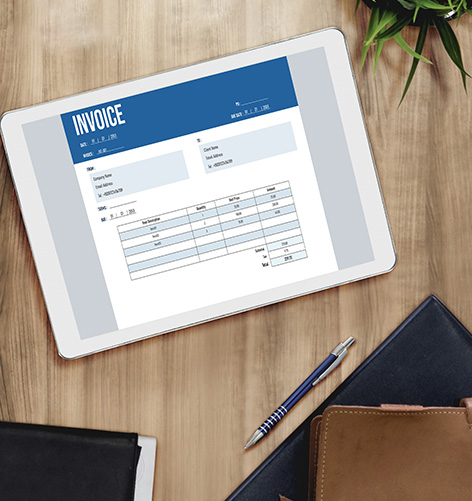











UAE e-invoicing requires hospitality businesses to generate, exchange, and report invoices in structured XML format through an Accredited Service Provider (ASP) on the Peppol network. This applies to B2B and B2G transactions, including corporate bookings, event contracts, and supplier invoices. Hotels, restaurants, and resorts must issue invoices that comply with the PINT-AE data dictionary and transmit them to the Federal Tax Authority in near real-time. The mandate is formalized under Ministerial Decisions No. 243 and 244 of 2025, with phased enforcement beginning January 2027 for large businesses.
The UAE Ministry of Finance has set a phased timeline. Voluntary adoption opens in July 2026. Businesses with annual revenue of AED 50 million or more must achieve full compliance by January 2027. Smaller businesses follow by July 2027, and government entities by October 2027. The deadline for appointing an ASP has been extended to October 30, 2026 for large businesses. Hospitality operators should begin readiness assessments now, given the complexity of multi-department billing and PMS integration requirements unique to the sector.
Tourism Dirham charges and municipality fees are common line items on hotel invoices in Dubai and other emirates. Under the e-invoicing framework, every charge on a tax invoice must be captured in structured XML with correct tax treatment classification. This means Tourism Dirham, municipality fees, and VAT must each be mapped to the appropriate data dictionary fields. Incorrect classification could trigger validation errors during ASP processing or invite scrutiny during FTA audits. Proper field mapping during implementation prevents these issues.
Cabinet Decision No. 106 of 2025 establishes specific administrative penalties. Failure to implement the e-invoicing system or appoint an ASP by the prescribed deadline attracts a fine of AED 5,000 per month. Late issuance or transmission of individual electronic invoices carries a penalty of AED 100 per document, capped at AED 5,000 monthly. Failure to report system malfunctions to the FTA or ASP incurs AED 1,000 per day. These penalties apply to mandatory-phase businesses and accumulate until the violation is resolved.
Oracle Opera Cloud is widely used across UAE hotels and resorts for property management. It supports API-based integration that allows invoice data, including room charges, F&B billing, and corporate folios, to be extracted and formatted into PINT-AE compliant XML. This requires middleware or direct ASP integration to route structured invoices through the Peppol network to the FTA. AA Technologies configures these connections, mapping Opera’s billing fields to the UAE data dictionary so that invoice generation and submission happen with minimal manual intervention.
The initial mandatory phases of UAE e-invoicing focus on B2B and B2G transactions. Individual guest invoices (B2C) are not covered in the first compliance wave. However, hotels that issue invoices to corporate clients, travel management companies, government delegations, or event organizers for business purposes must comply from the relevant deadline. Additionally, supplier-side invoices received from vendors, contractors, and service providers will also flow through the e-invoicing system. Hospitality operators should prepare all transaction types for eventual inclusion as the mandate expands in later phases.
Selecting an Accredited Service Provider depends on several factors specific to hospitality operations. Transaction volume is critical, as large hotels process thousands of invoices monthly across multiple departments. PMS compatibility matters because the ASP must integrate with your property management and point-of-sale systems without workflow disruption. Multi-property operators need an ASP that handles consolidated reporting across entities and emirates. AA Technologies evaluates ASP options on your behalf, assessing technical capability, Peppol certification, pricing structure, and local support coverage to recommend the most suitable provider for your portfolio.
A well-planned iCardmplementation minimizes disruption to daily hospitality operations. The process begins months before the compliance deadline with a readiness audit, followed by phased system configuration and targeted staff training. Front desk, accounts receivable, and F&B operations continue using familiar interfaces while backend invoice formatting and transmission are automated through the ASP connection. Dedicated testing environments validate every invoice type before go-live. Properties that start preparation during the voluntary adoption phase (July 2026) gain the advantage of identifying and resolving integration issues well before enforcement begins.
A well-planned iCardmplementation minimizes disruption to daily hospitality operations. The process begins months before the compliance deadline with a readiness audit, followed by phased system configuration and targeted staff training. Front desk, accounts receivable, and F&B operations continue using familiar interfaces while backend invoice formatting and transmission are automated through the ASP connection. Dedicated testing environments validate every invoice type before go-live. Properties that start preparation during the voluntary adoption phase (July 2026) gain the advantage of identifying and resolving integration issues well before enforcement begins.
Hospitality businesses face a unique combination of compliance challenges. High daily transaction volumes across multiple revenue streams (rooms, dining, events, retail, spa) create complex billing structures. Emirate-specific charges like Tourism Dirham and municipality fees require precise tax classification in the data dictionary. Bundled service packages need itemized VAT treatment per component. Corporate folios often consolidate charges across departments and dates. Guest-facing POS systems must connect to back-office ERP platforms for compliant invoice generation. These layered requirements demand hospitality-specific implementation expertise rather than a generic compliance approach.